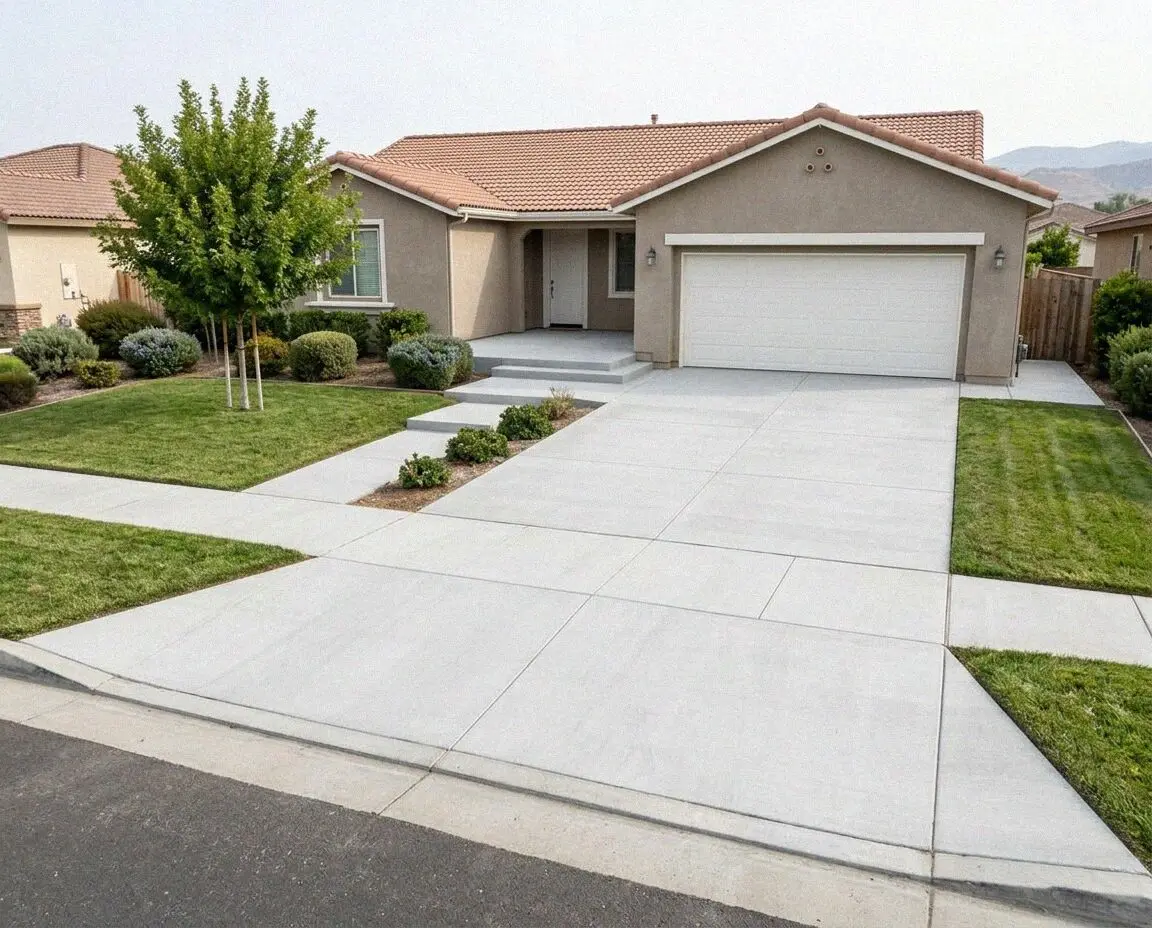
Concrete Driveway Building
Is your driveway cracking under parked trucks? We place four inches of crushed base and pour 4,000 PSI concrete over tied steel rebar.

Driveways, sidewalks, garage floors and patios, for hundred-year-old lots off Holt Avenue and for the tracts out at Phillips Ranch. Call and the job gets measured at your property before anything is booked.


 5.0 Stars Rated by our customers · Google, Facebook and the BBB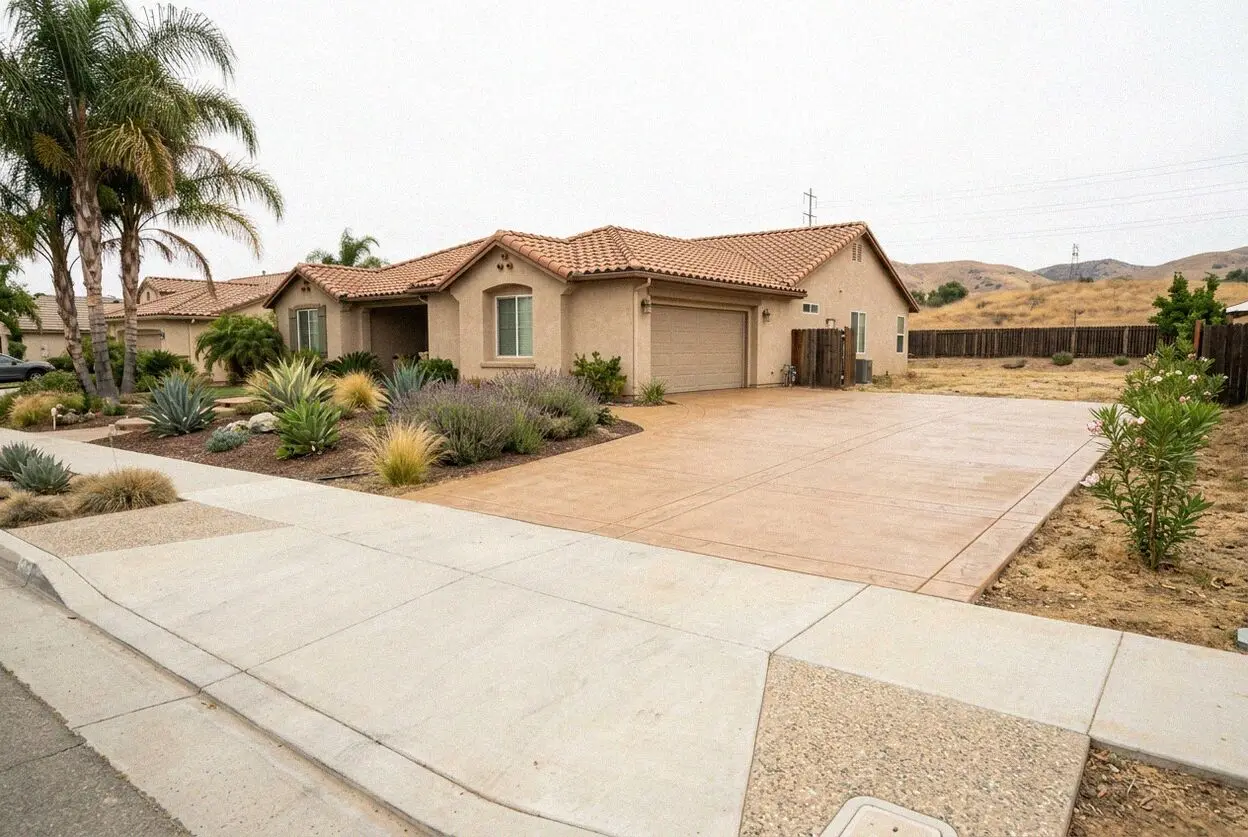
Pomona Concrete Pro works a city with two halves: pre-war lots around Lincoln Park and Hacienda Park, where the paving has to suit the house and the commission that reviews it, and post-war and 1970s tracts running out to Phillips Ranch and Westmont. A garage floor at the end of an alley and a new frontage walk on Holt are both an ordinary week here.
Is your driveway cracking under parked trucks? We place four inches of crushed base and pour 4,000 PSI concrete over tied steel rebar.
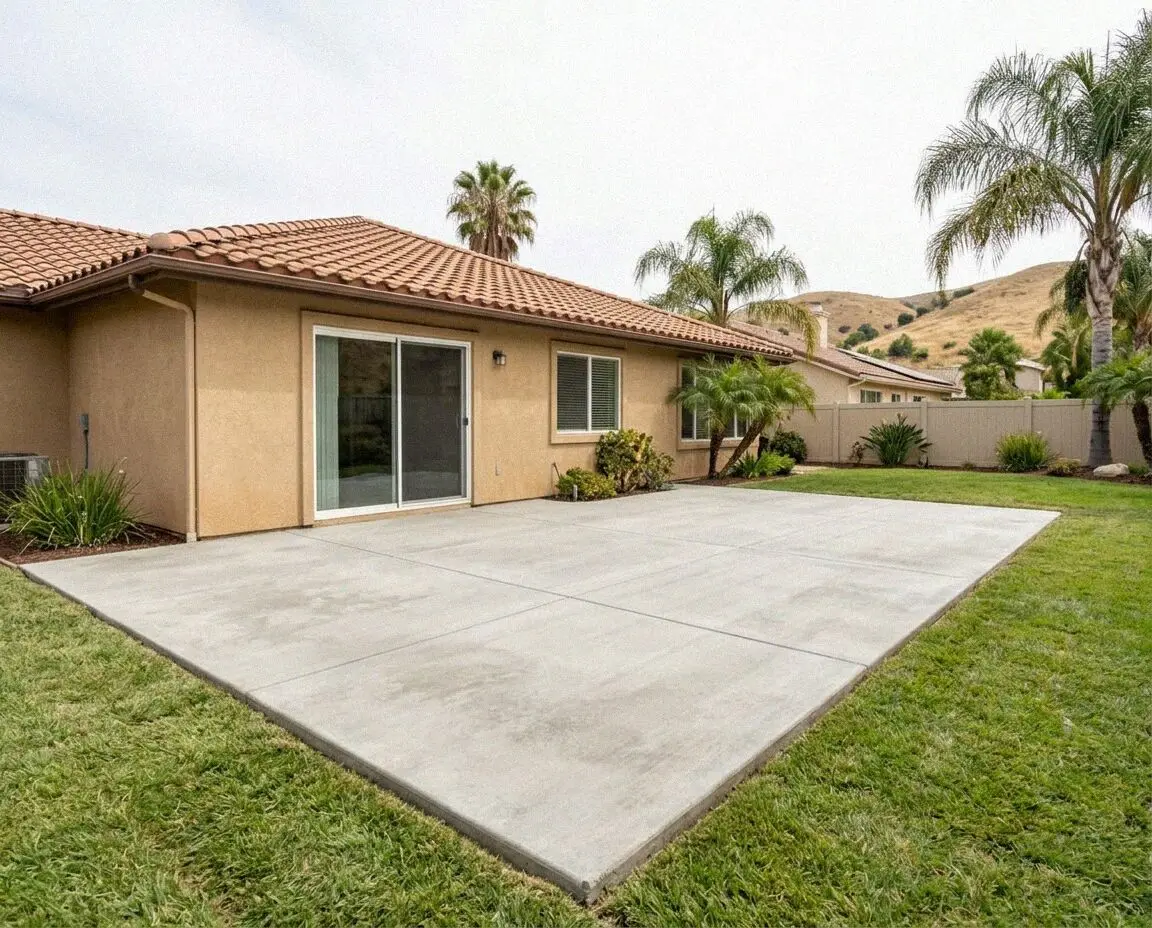
Will Pomona clay soil break your patio slab? We pour four inches of concrete over four inches of compacted crushed rock with steel rebar.
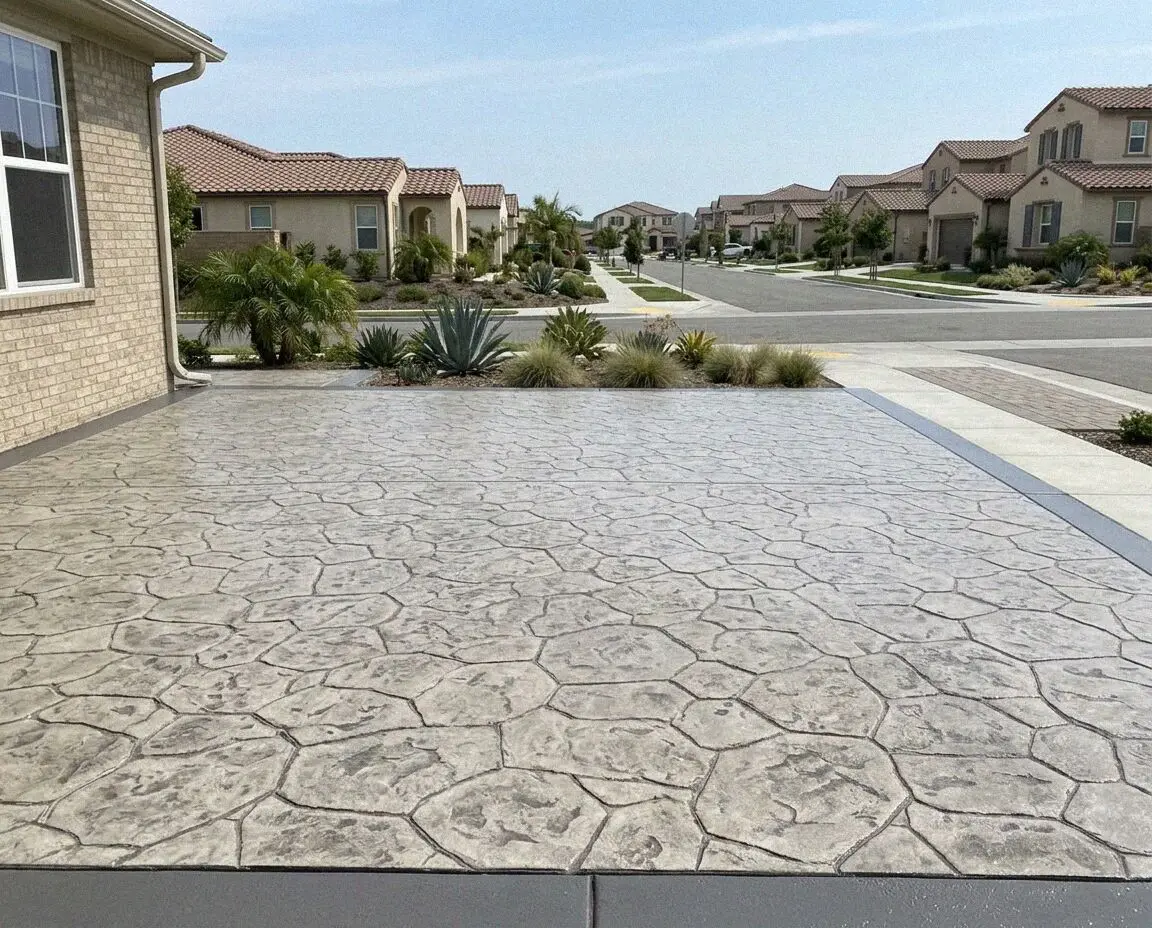
Worried about stamped concrete flaking in summer heat? We pour 4 inch slabs using 4000 PSI integral mix over 4 inches of compacted rock.
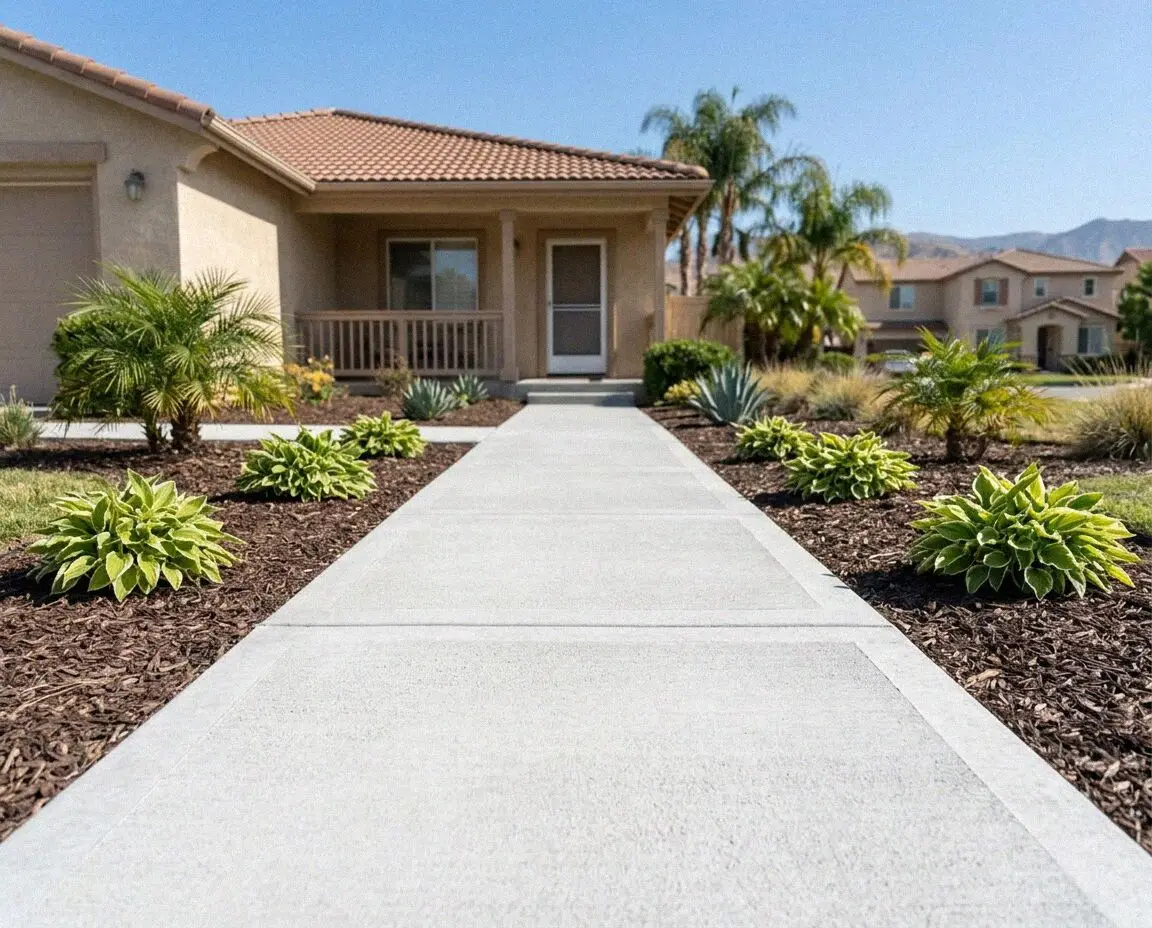
Are lifting parkway roots cracking your walkway? We excavate, compact 4 inches of aggregate, and pour 4-inch sidewalk slabs in Pomona.
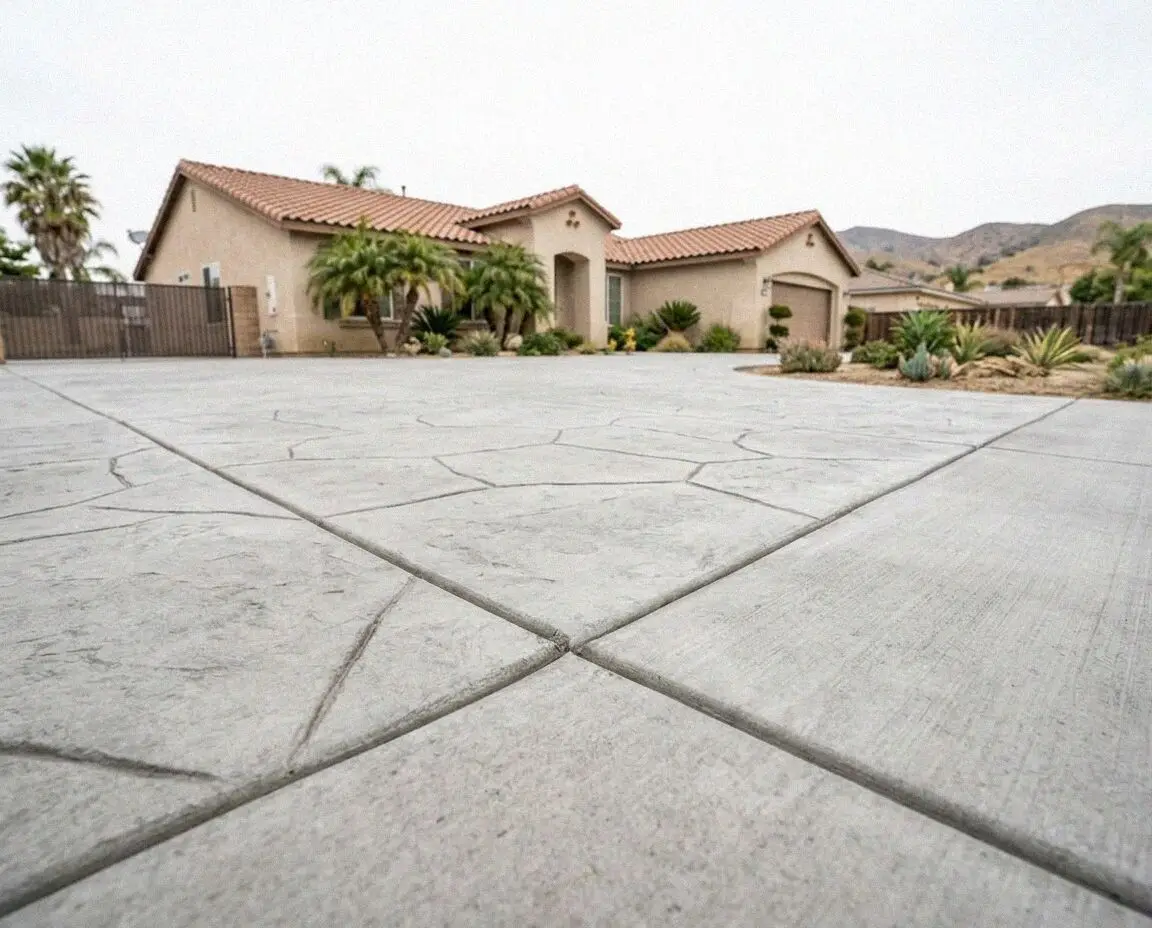
Is your garage slab settling under daily parking? We place four-inch structural pours with rebar grids and a four-inch crushed rock base.
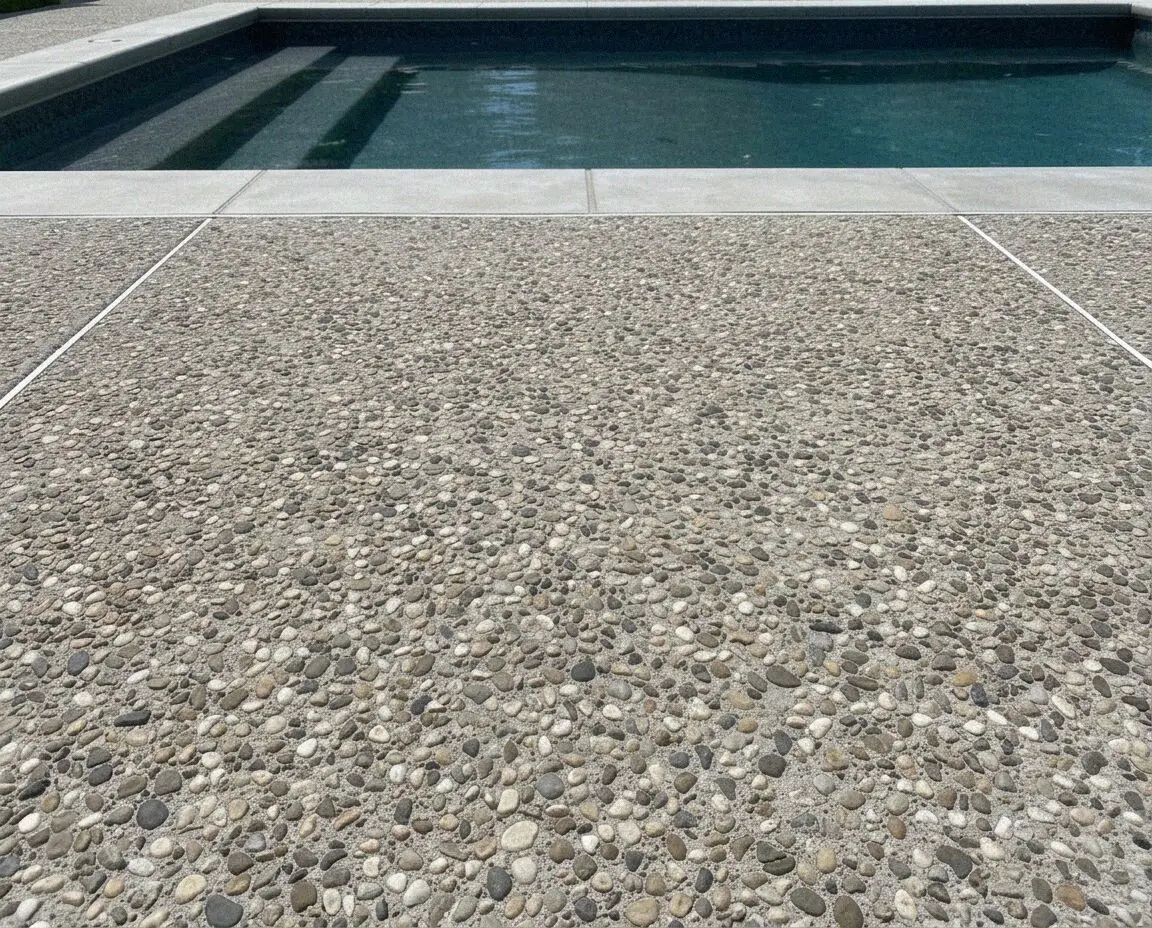
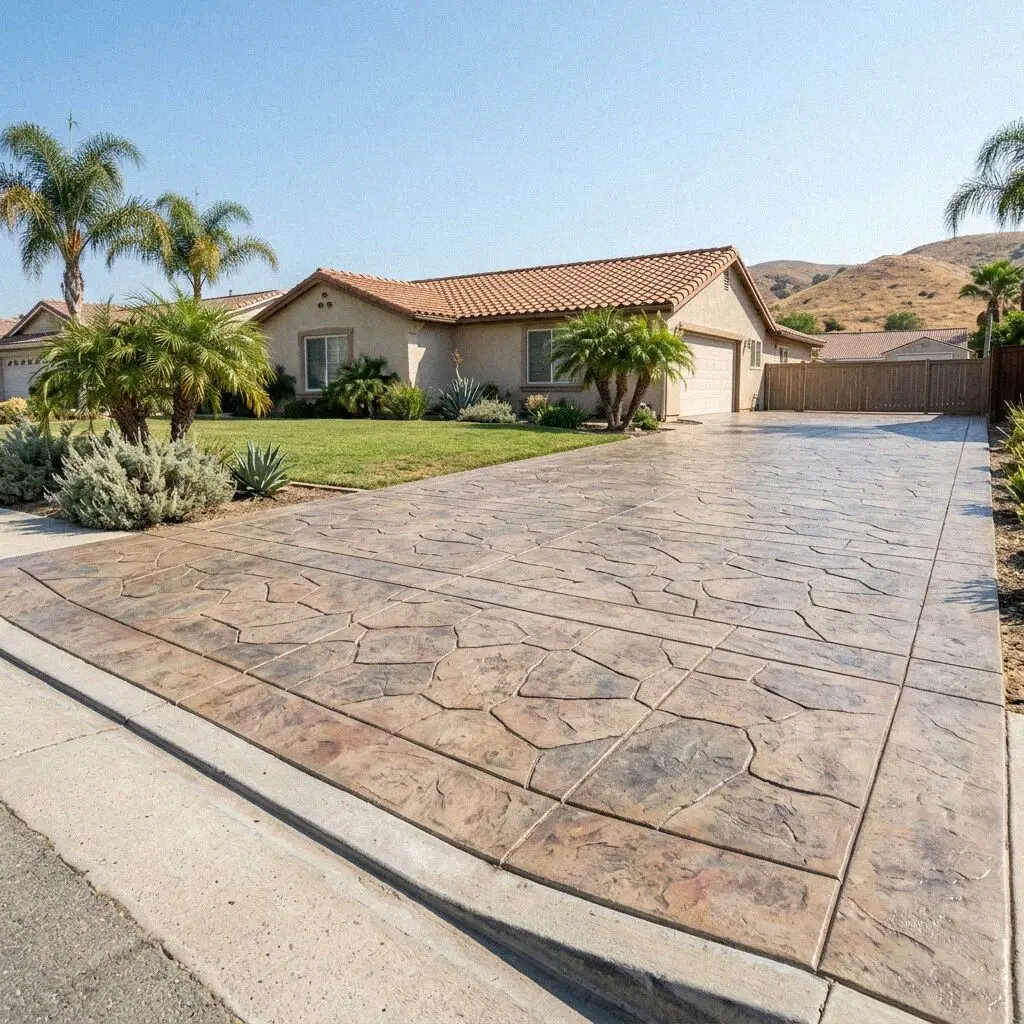
Planning decorative flatwork in Pomona? We pour 4 inch stamped and stained slabs engineered for inland heat and alluvial ground stability.
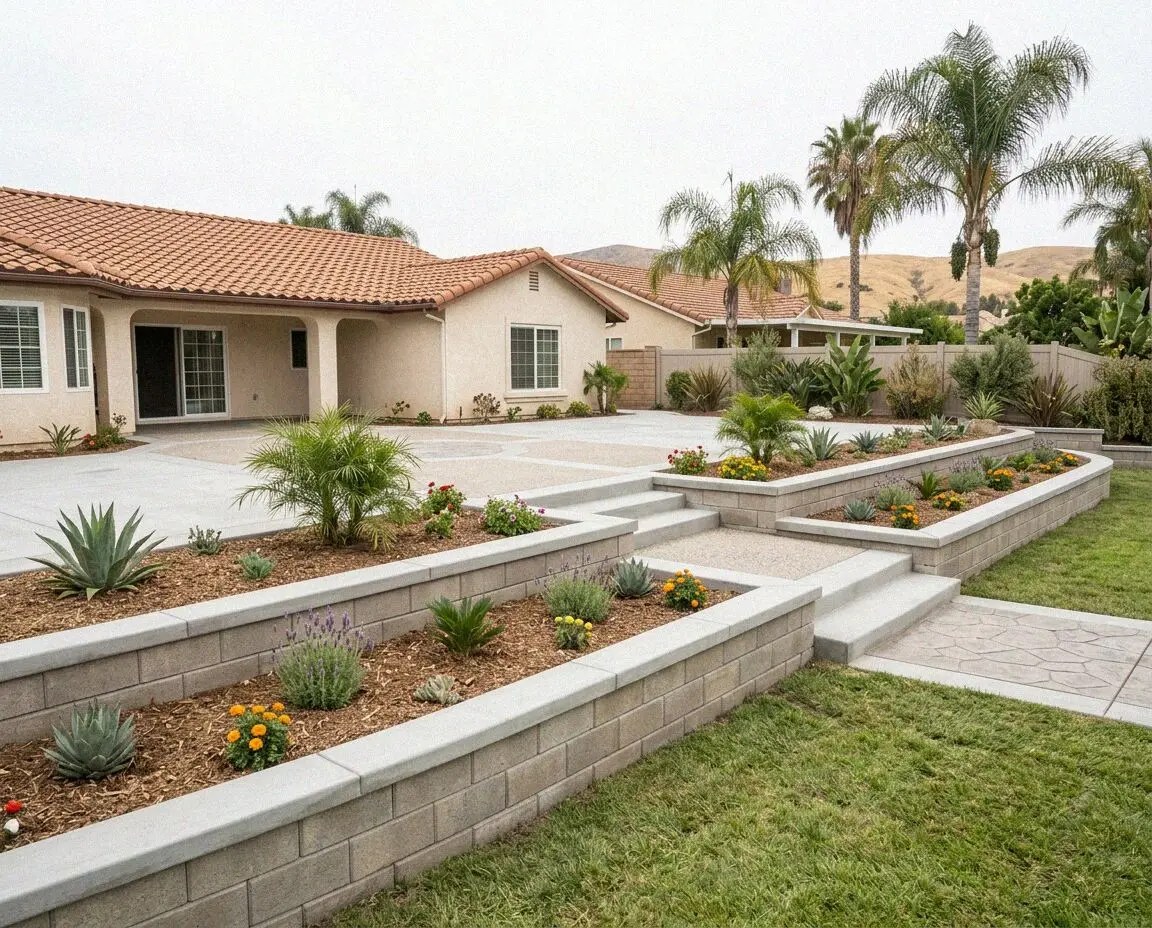
Is your slope creeping toward the house? We pour reinforced stems with footings set 24 inches deep and continuous 4 inch schedule 40 pipe.
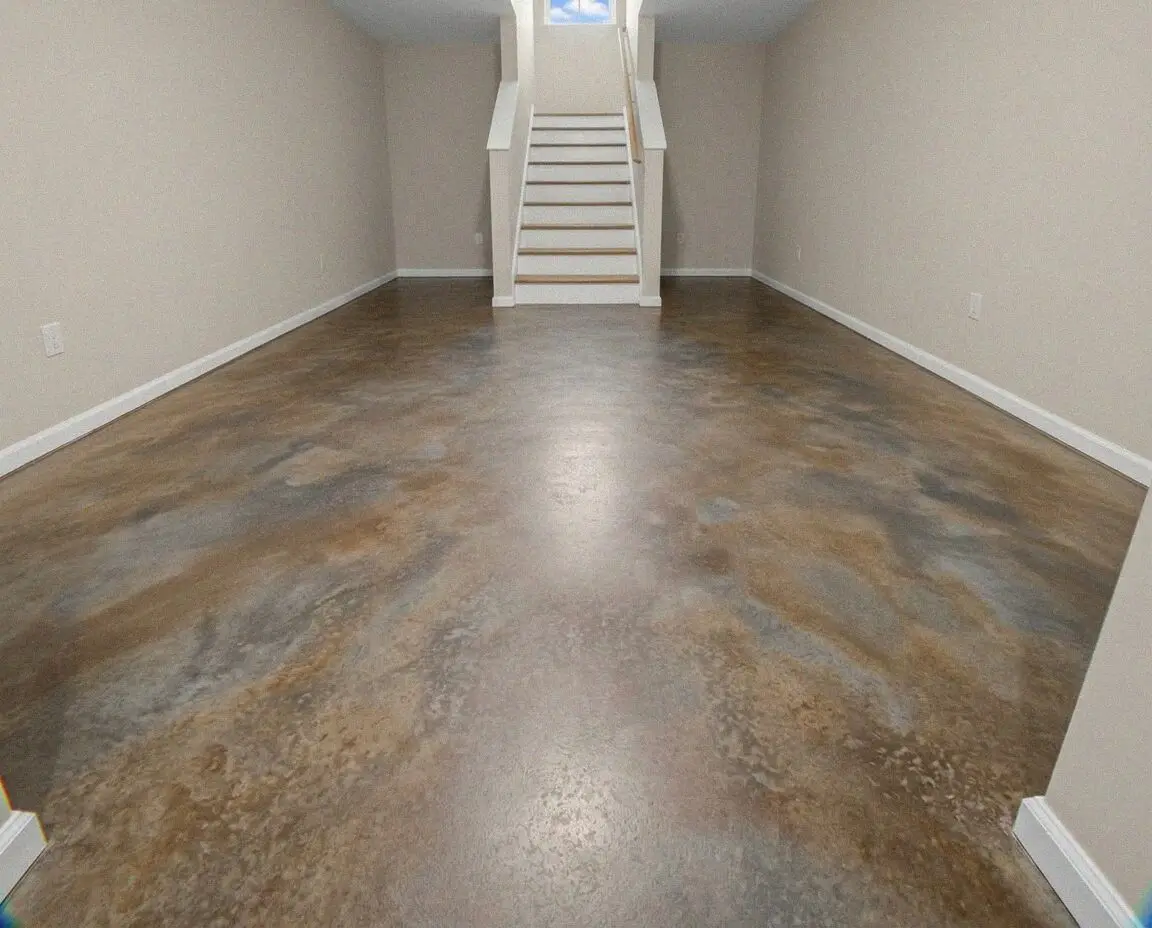
Worried about damp soil ruining your interior living floor? We pour 4 inches of 3500 PSI concrete over a continuous 15 mil vapor barrier.
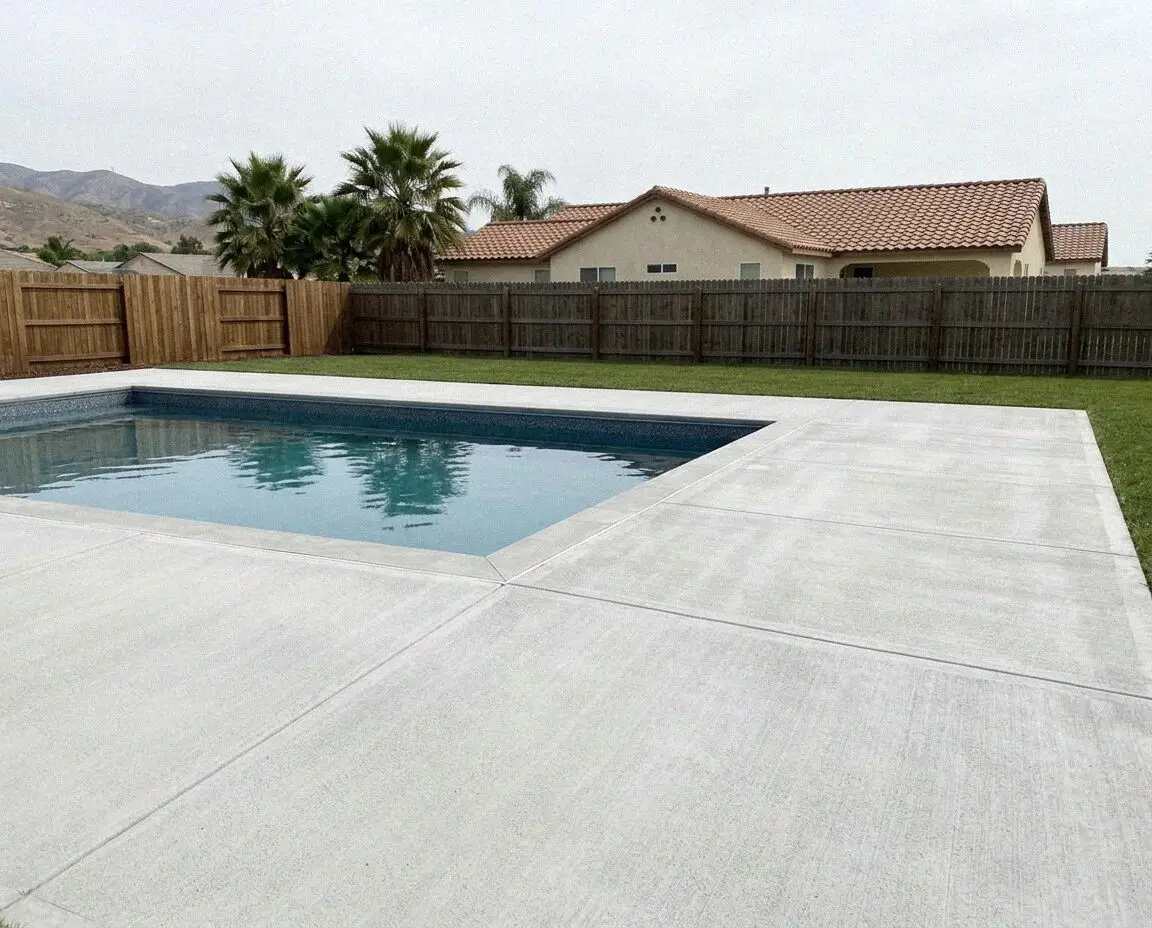
Is your pool deck pulling away from the coping? We cast four-inch reinforced slabs over four inches of crushed base to stop ground shift.
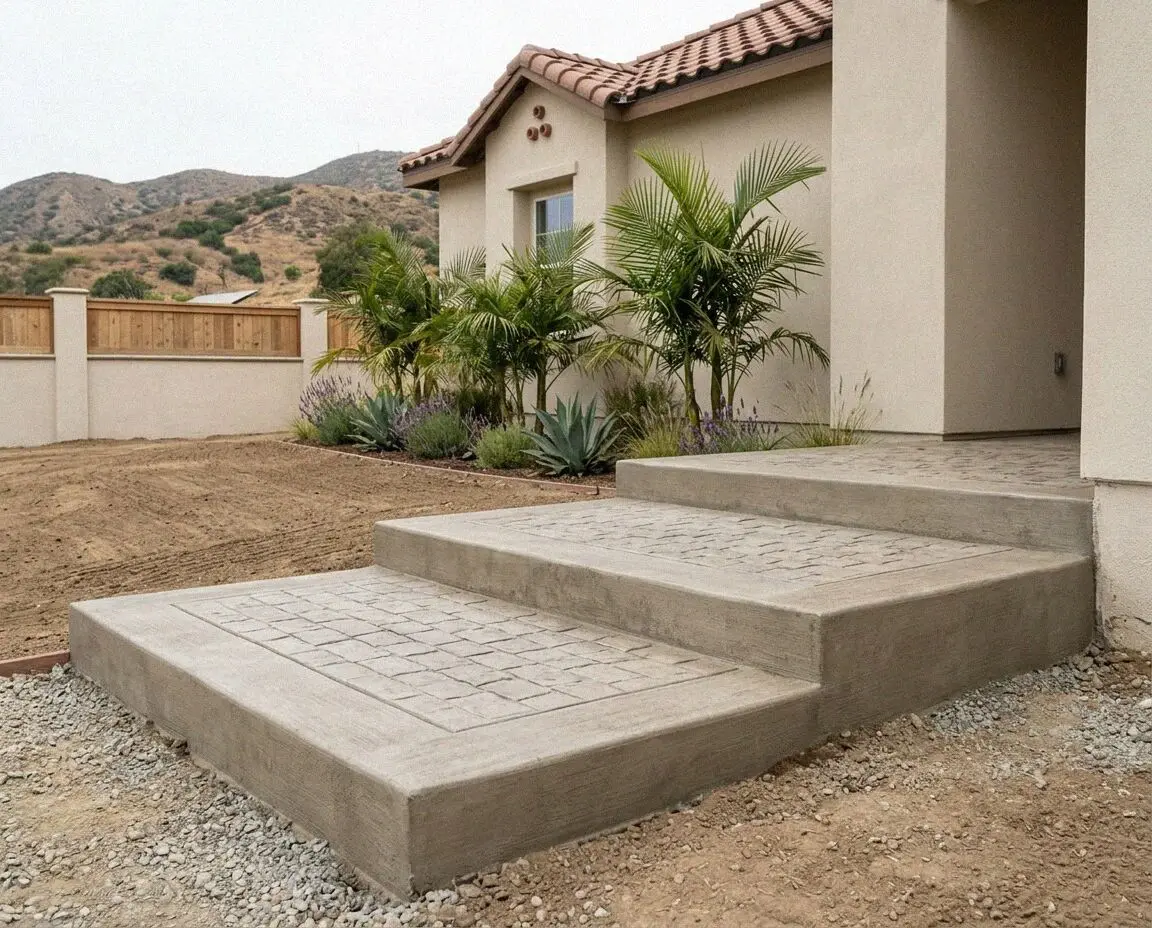
Are your porch steps pulling away from the house? We pour rebar reinforced steps pinned into the stem wall with half inch steel dowels.
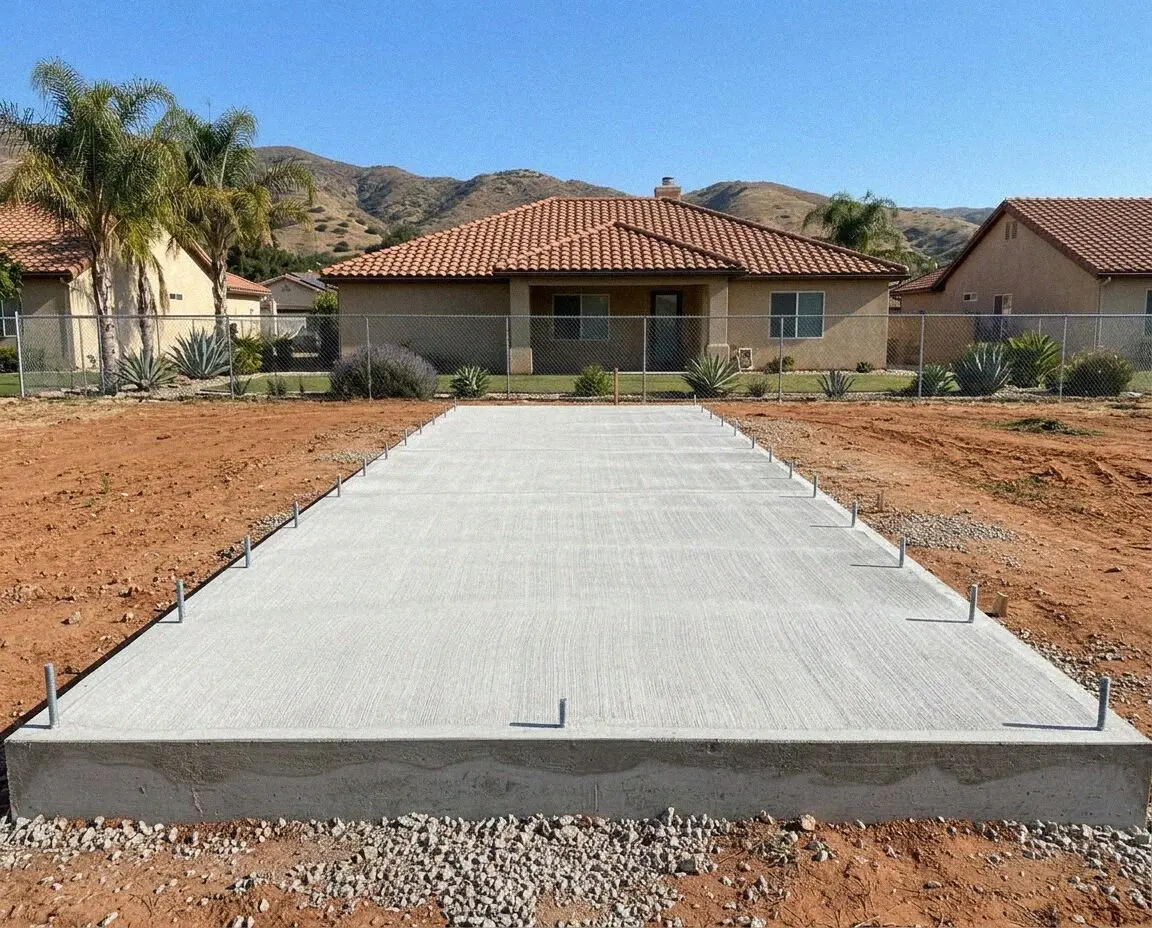
Building on Pomona clay? Slabs get 12-inch thickened perimeter footings, 4-inch compacted base stone, and 4000 PSI concrete reinforcement.
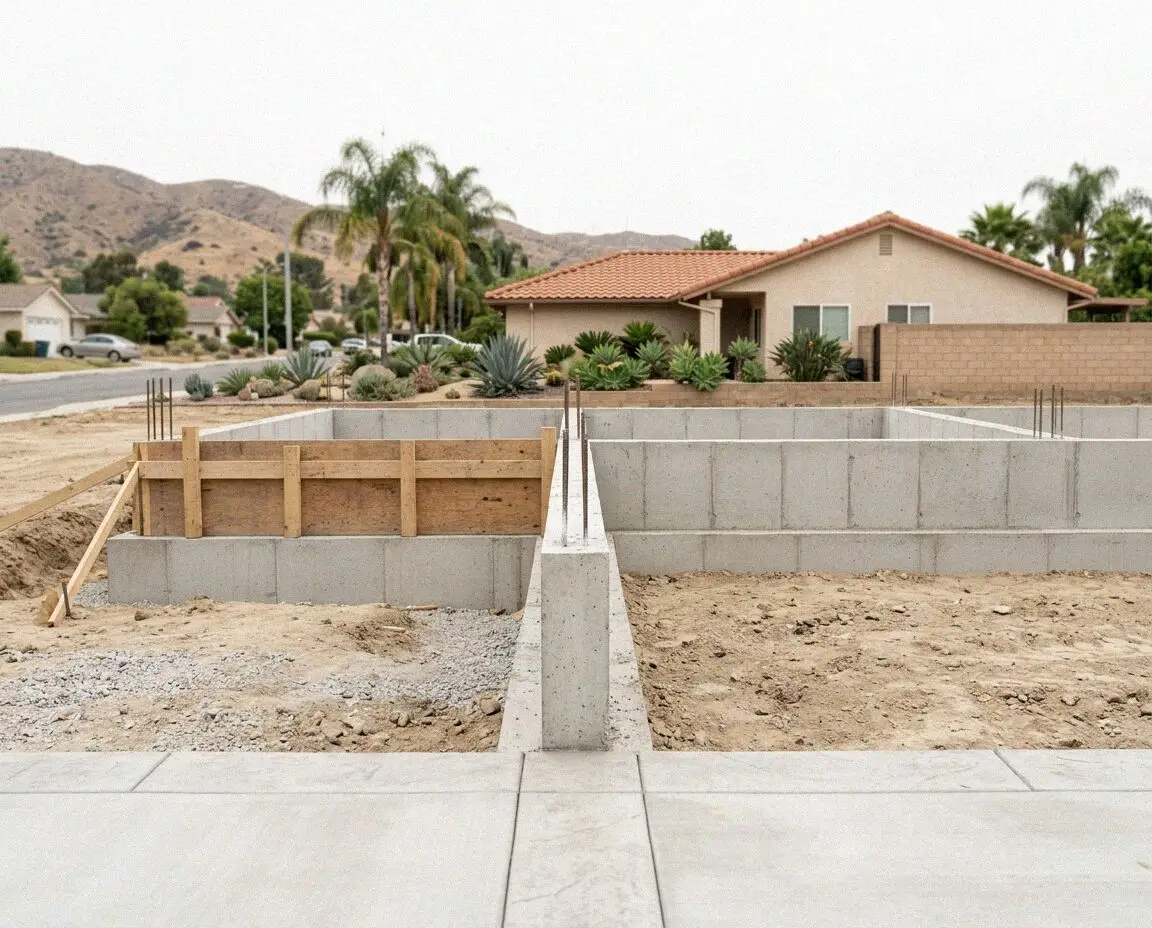
Worried about shifting subgrade in Pomona? We dig perimeter footings 18 inches into firm native ground and tie grade 60 steel rebar grids.
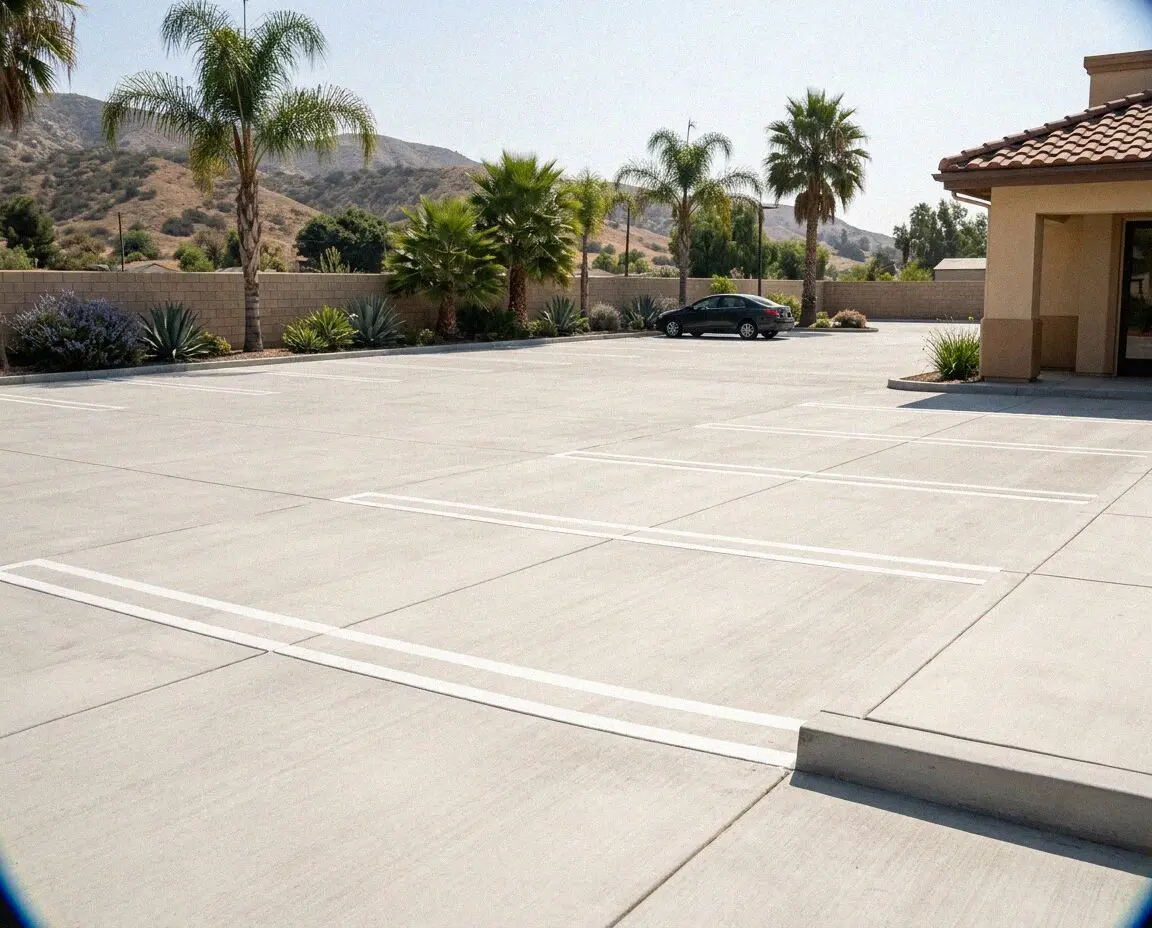
Need a commercial lot built for heavy truck traffic? We cast six-inch reinforced 4,000 PSI slabs over four inches of compacted rock base.
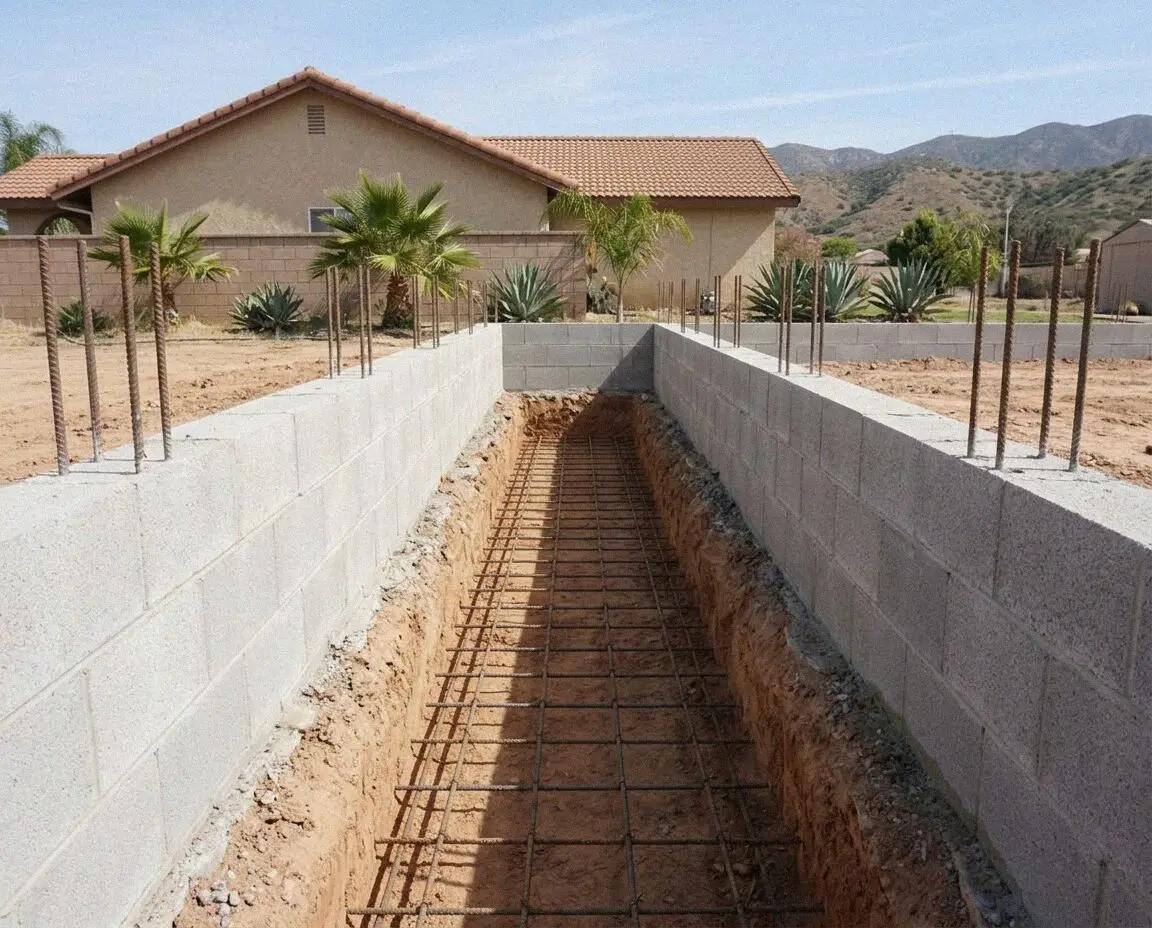
Will your home addition settle on shifting Pomona dirt? We dig footings 18 inches into firm bearing soil with tied steel reinforcement.
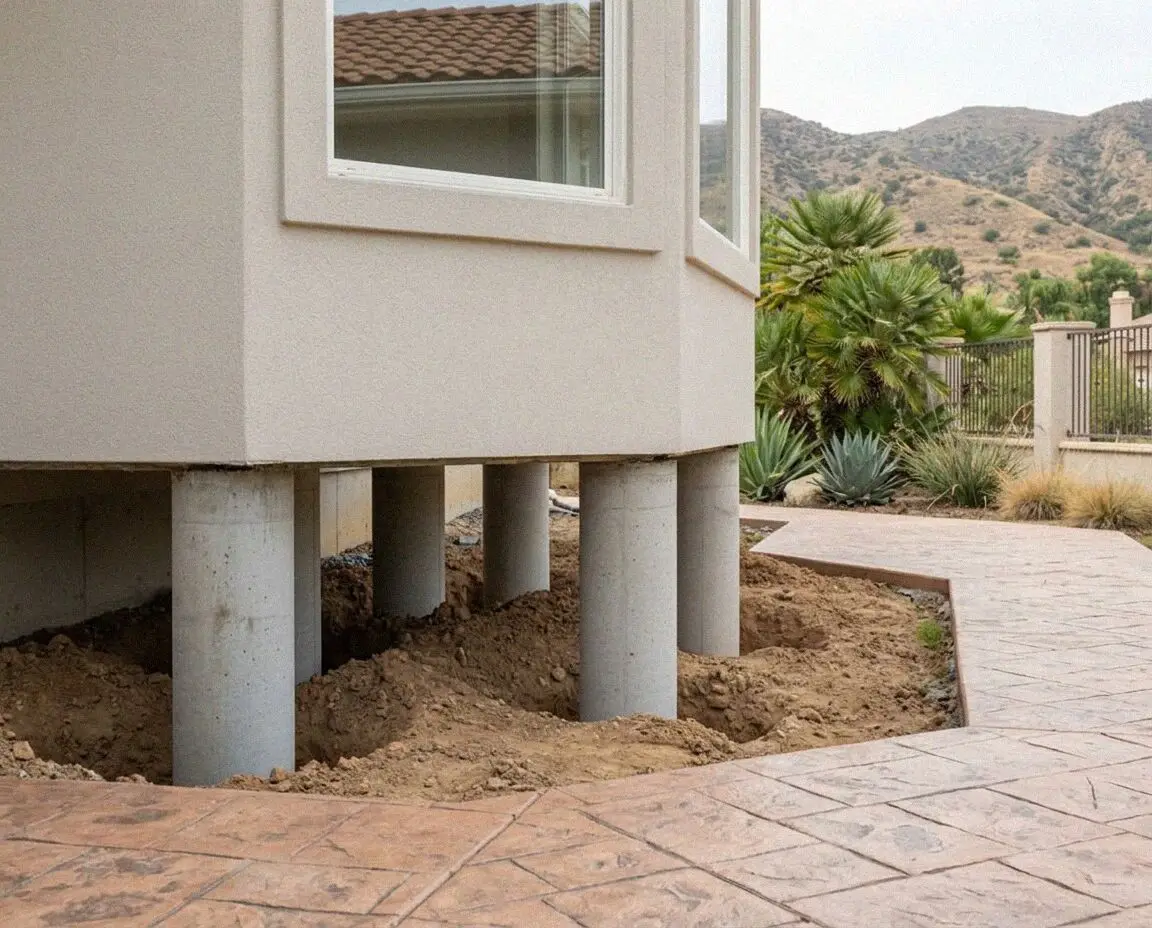
Has floor settlement cracked your drywall? We lift sinking perimeters with hydraulic jacks and drive steel piers 20 feet to load bedrock.
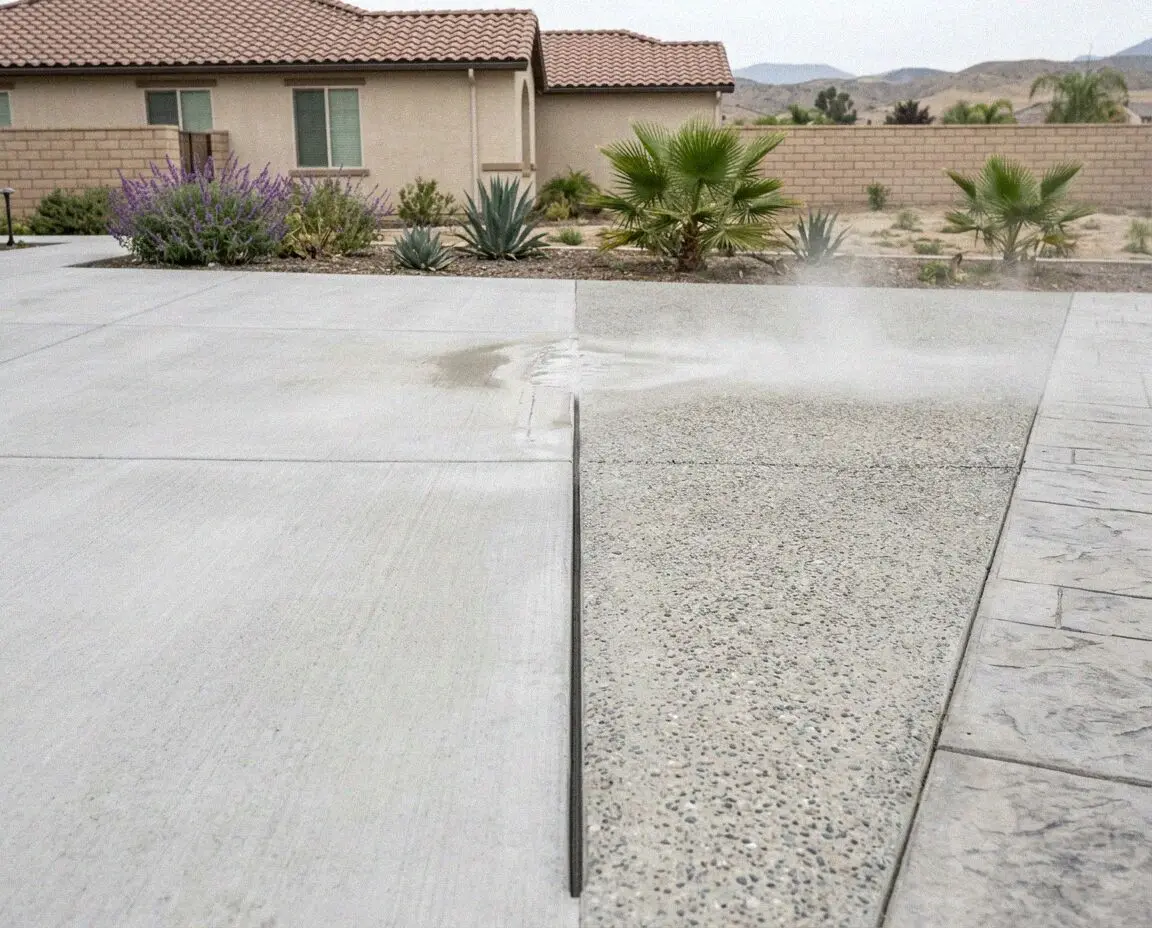
Need utility trenches or clean cuts without shattering older aggregate? We run diamond blades up to 8 inches deep with water containment.
Four steps. Hector Zamora writes the estimate at step two and stands the pour at step three, so the job is never handed to a crew you have not met.
Call or send the form. Someone rings you back within 1 business day and books the free on-site visit for a day inside that week.
Hector walks the lot, checks access and the fall to the street, then itemises demolition, base, pour, finish and cleanup in writing.
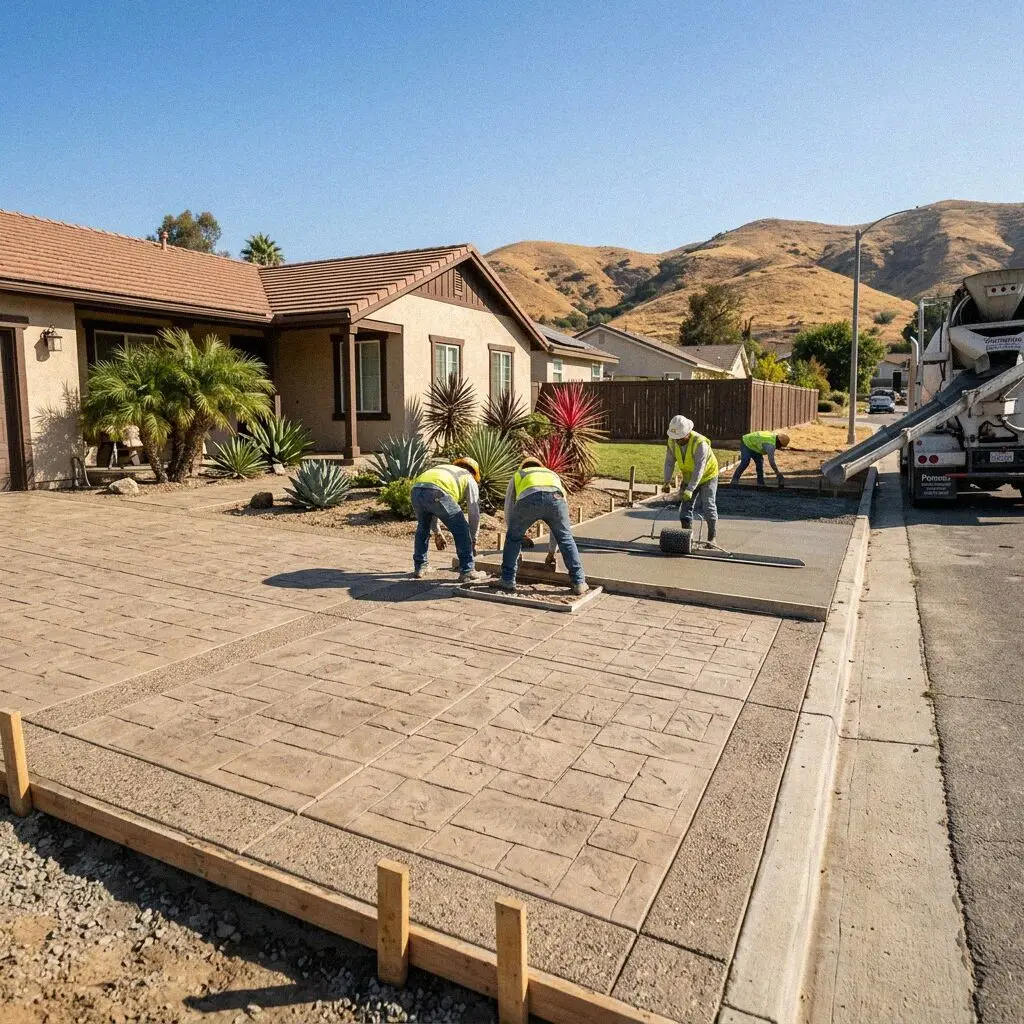
You approve the figure, we take out whatever permit the city wants, then break out the old slab, build the base, form up and pour.
We clear the site, then you and Hector go over the finished slab against what the estimate said, line by line, before the job closes.
Concrete has its own classification in California and C-8 is it, held in that class with the California Contractors State License Board and searchable by name on their register. Cover reaches every county this office works into, so a job across the Orange County line is no different.
Hector Zamora opened the yard on West Holt Avenue in 2020, after 13 years pouring around the Pomona Valley. Which blocks have alleys behind them, where the creek wash turns loose under a slab, and how the Building and Safety counter runs are learned things, not read ones.
Nothing is charged for the visit. On a Pomona lot the first question is access: a narrow pre-war frontage with the garage down an alley may take barrows where a Phillips Ranch drive takes the truck, and that moves the labor line further than square footage does.
Every job carries a written workmanship guarantee against defects in how it was built, set out on the estimate you sign. The claim we meet most here is a panel dropped into trench backfill nobody recorded. Wear, staining and movement past what the joints absorb are not defects.
Not sure yet? Ask us first. (909) 555-0175 or send us a message.
Customer Reviews
Three jobs, three parts of the city, and what each customer wrote afterward. Pomona Concrete Pro holds a 5.0 average across Google, Facebook and the BBB.
“Our house is inside the Lincoln Park district, so the drive and the front walk had to go past the preservation people before anyone could break anything out. Ganesha handled that paperwork, matched the scoring on the original walk and poured 430 square feet at 5 inches.”
“The garage sits at the back of the lot off the alley and the floor had split corner to corner, because the old slab was barely three inches with nothing under it. They took it out, laid a vapor barrier, poured 5 inches and sawed the joints before leaving. My tools stopped rusting.”
“The back of our lot in Ganesha Hills falls away and the old block wall had started leaning into next door. They put the footings 24 inches down, packed rock and a drain pipe in behind the stem and ran it 38 feet across. Two wet winters on and it is still dead straight.”
About Pomona Concrete Pro
Pomona Concrete Pro is a concrete contractor owned and run in Pomona, CA. Hector Zamora started it in 2020 with 13 years already spent on Pomona Valley crews, and it now covers 20 cities across Los Angeles, San Bernardino, Orange and Riverside counties, residential and commercial alike.
Most of the decisions here are made before anyone orders concrete. The city incorporated in 1888 and the streets around Lincoln Park went up between the 1890s and the 1940s, so the drive, the walk and the alley apron at a bungalow are on their second life at best. Whatever goes down carries a written guarantee on the workmanship.
The C-8 Concrete license is active with the California Contractors State License Board, we carry liability insurance on every job, and permits are filed with the Building and Safety Division at the City of Pomona, plus a Certificate of Appropriateness where the house sits in a designated district. Every estimate is measured and written on site.
How We Build
Whatever the job, the sequence does not change: dig to firm ground and prove it, build the base back up in compacted lifts, pour 4 to 6 inches against the load it will carry, and saw the joints before the crew leaves for the day.
Jobs on streets you would recognize, the bungalow blocks in Lincoln Park, the alleys behind Holt, the slopes up in Ganesha Hills and the tracts out at Phillips Ranch. Worth driving past one before you decide anything.
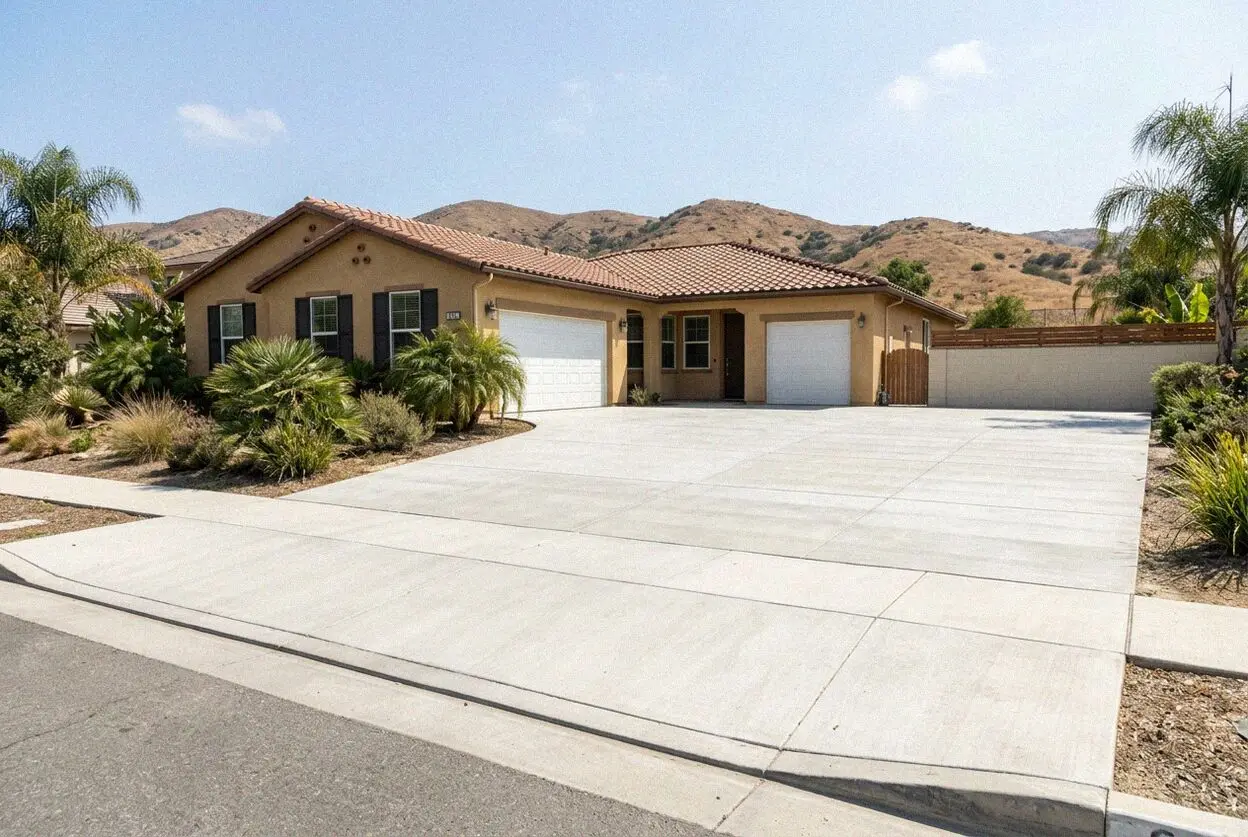
5 in over a 10-mil vapor barrier · Joints sawn same day
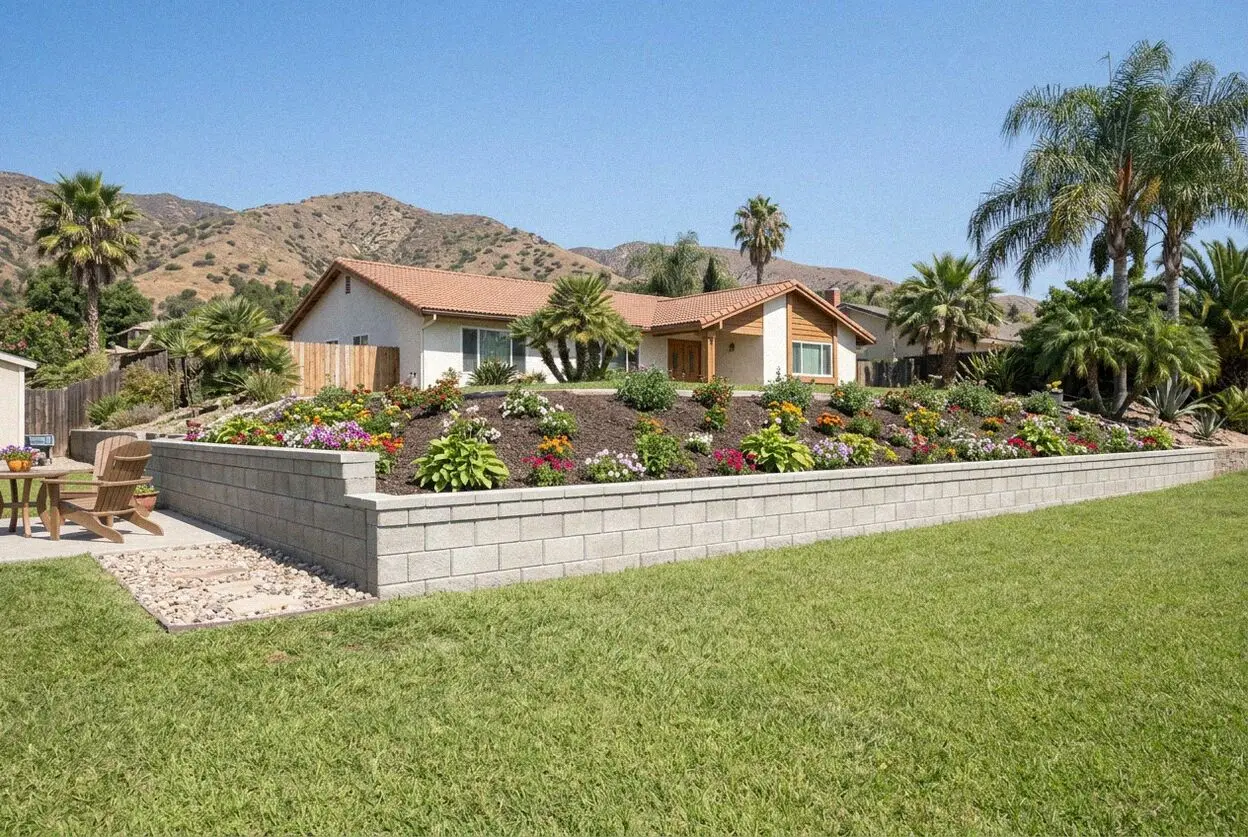
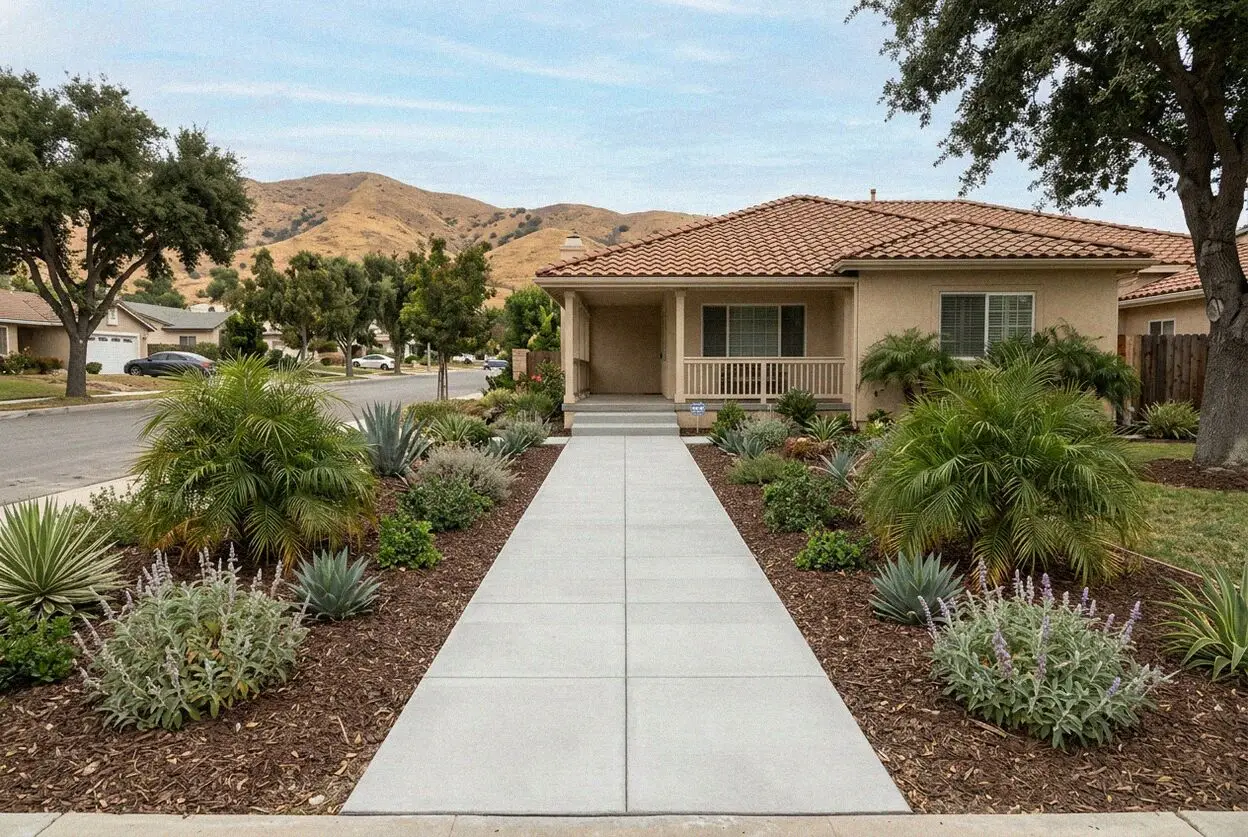
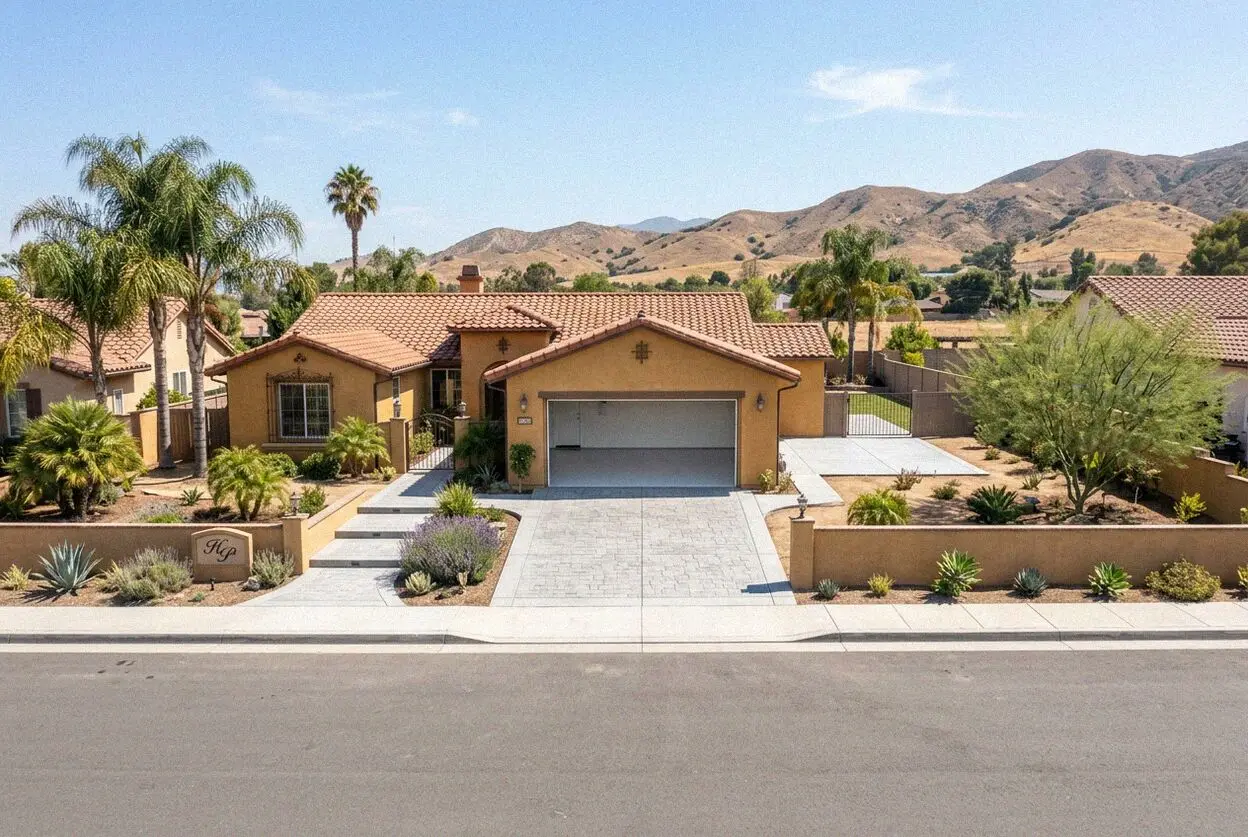
62 linear ft · Root barrier and encroachment permit
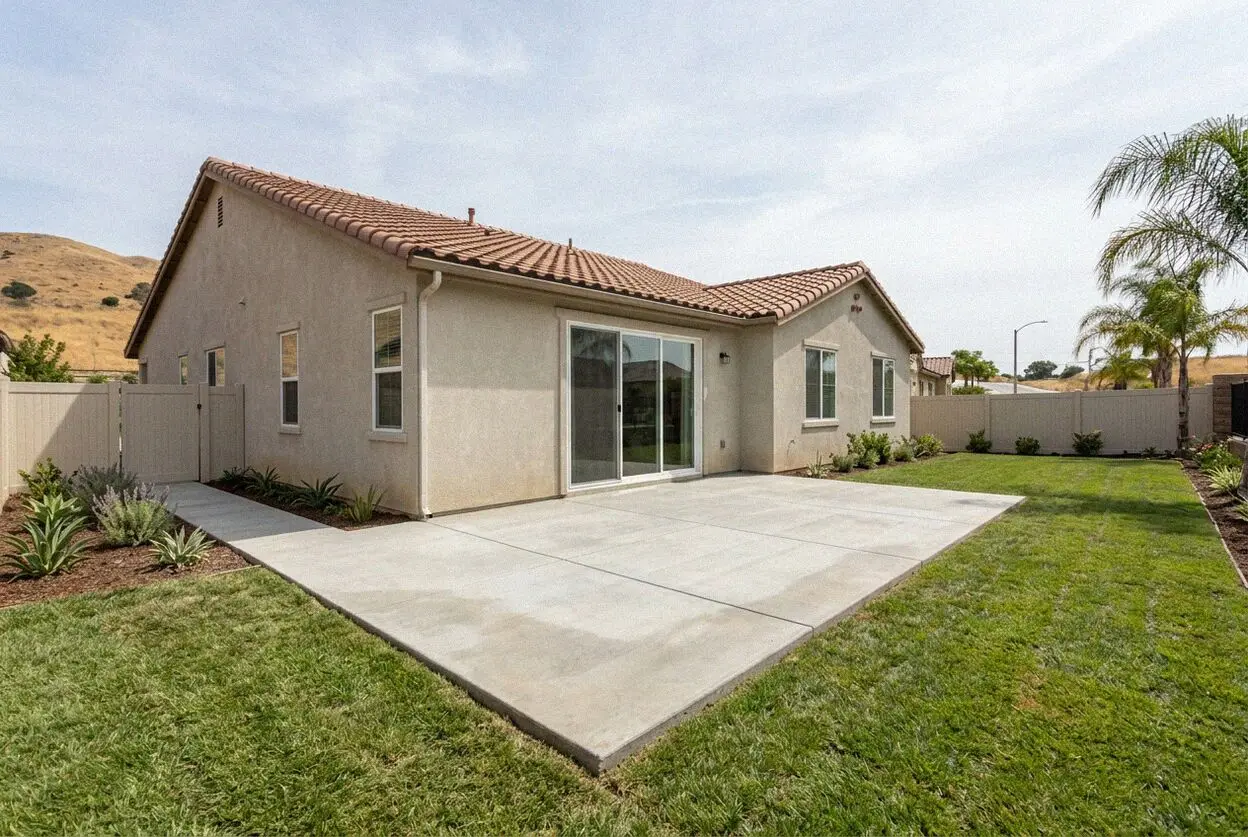
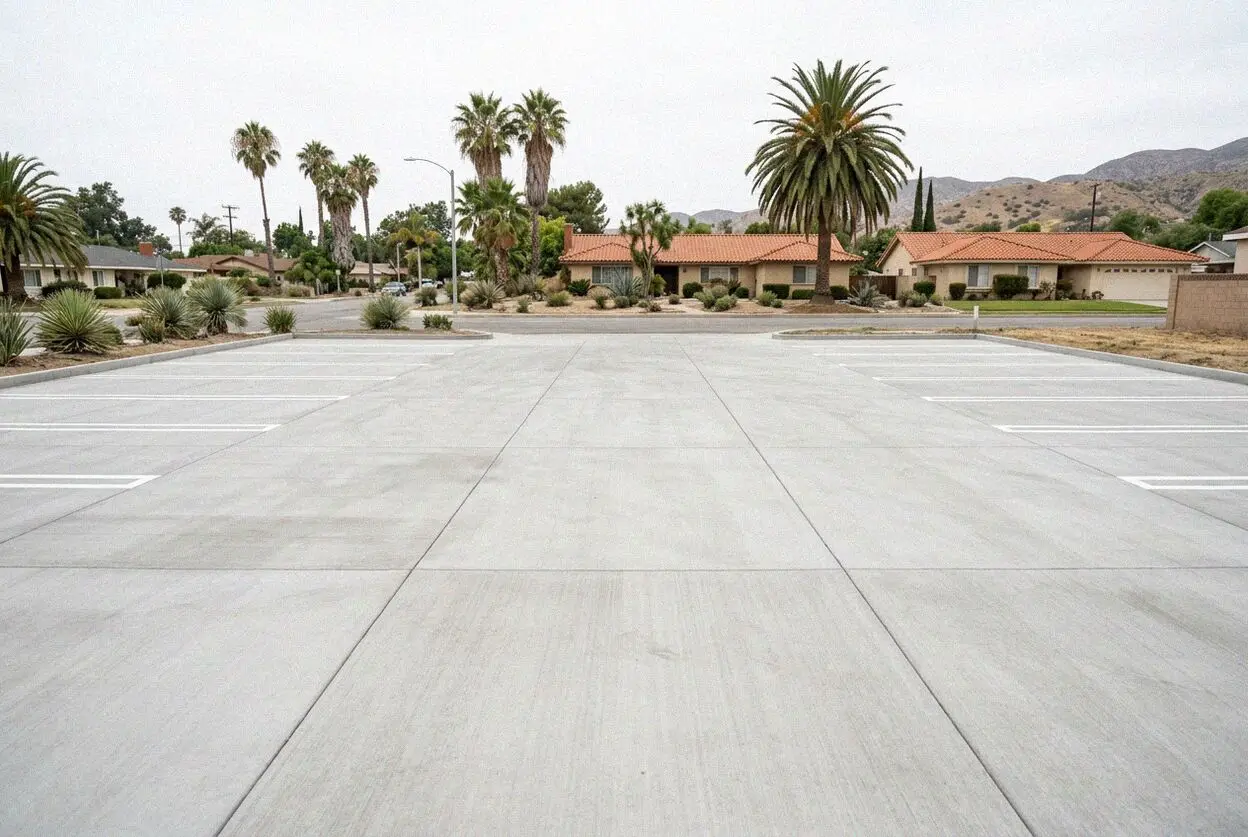

Hector Zamora spent 13 years on concrete crews around the Pomona Valley, alley aprons behind the bungalows off Holt, garage floors, hillside footings up in Ganesha Hills, before opening Pomona Concrete Pro in 2020. The C-8 license is in his name. He lives in Pomona, writes every estimate himself, and is at the property the morning the concrete arrives.
In This City
Housing that starts in the 1890s, a creek fan under most of it, and a commission with a say in what the front of the house looks like. All three land on the estimate.
Pomona incorporated on January 6, 1888 and was the western anchor of the citrus belt by the 1920s, which is why the oldest streets look the way they do. Lincoln Park alone holds 821 structures across 45 blocks, most built between the 1890s and the 1940s: bungalows on narrow lots, a detached garage at the back, and an alley doing the work a modern driveway does. Post-war blocks fill the middle of the city, and Phillips Ranch and Westmont went up from the 1970s on the slopes south of it.
Underneath, most of the city is alluvial fan, sand and gravel washed south out of the San Gabriels by San Antonio Creek and the washes beside it. It drains well, which is a gift, and it hides loose seams and old trench backfill, which is not: a slab bridges those until it stops doing so. Up around Ganesha Hills and out at Phillips Ranch the grade brings cut-and-fill in instead. Your own parcel is on the USDA Web Soil Survey.
Permits come from Building and Safety at the City of Pomona, and work in the parkway or across the public walk takes an encroachment permit too. Pomona is in Los Angeles County, not San Bernardino or Riverside, so the counter and the historic-district rules are not the ones a crew from east of the county line knows. In Lincoln Park, Hacienda Park and Wilton Heights, paving is an alteration and needs a Certificate of Appropriateness first.
Concrete is what we put on a Pomona frontage, and the alley decides that as much as the heat does: a rigid slab carries a truck backing the length of a narrow lot, where asphalt ruts under the same turn and pavers spread apart at it.
| Option | Lifespan | Ready to use | Upkeep | On a Pomona lot |
|---|---|---|---|---|
| Poured concrete | 30-40 years | Walk at 24-48 hrs, drive at 7 days | Reseal every 2-3 years | Holds shape at 110 degrees; joints take the movement |
| Asphalt paving | 15-20 years | Drive on it in 2-3 days | Sealcoat every 2-3 years | Goes soft above 100 degrees and ruts where cars turn |
| Interlocking pavers | 25-50 years on a built base | Usable the same day | Re-sand joints every 1-2 years | Rides ground movement, but weeds and spreads at the joints |
Asphalt is cheapest to lay and dearest to keep. Pavers are the reverse, and they lift and reset where a utility trench is opened. Concrete sits between the two.
Because water leaves the top faster than the concrete below can gain strength, and what is left tears. Pomona averages 90 degrees in July and 92 in August, so pours start before 8 AM and the surface stays damp for the 7-day cure the Portland Cement Association sets out.
Usually. Failures start below the concrete far more often than in it. Compacted base spreads wheel load sideways and lets water off the underside instead of trapping it. Leave it out and the slab spans a soft patch until it snaps. None of it shows once the driveway is finished.
Because the ordinance counts surface paving as an alteration, not maintenance. In Lincoln Park, Hacienda Park and Wilton Heights a new drive or front walk needs a Certificate of Appropriateness from the Historic Preservation Commission at the City of Pomona, on top of the permit.
Into the joint. A curing slab shrinks and has to relieve that somewhere, so grooves are sawn 2 to 3 feet apart for every inch of thickness and the movement follows them rather than wandering across the pour. They go in the same day the concrete is placed.
It depends which side of the property line the work is on. Drives and walks inside it are exempt under the Residential Code, which never names a patio slab. Cross into the parkway or the approach and Engineering wants a permit. A retaining wall over 4 feet needs one either way.
4 inches under people and cars, 5 to 6 under a truck, an RV or a workshop floor. It is the cheapest line on an estimate and the one nothing fixes afterward: an inch light and the slab breaks up under ordinary use inside a few years. Whatever we are pouring is written on your figure.
What it costs, how thick it goes, what sits under it, why it gets jointed, when to seal it, which counter issues the permit and what the guarantee covers, answered for Pomona, and never with a price attached.
No single figure holds across a city like this, but four things move it, in order: thickness, how much old surface has to come out, what is found underneath once it is out, and the finish. A pre-war lot in Lincoln Park and a 1970s frontage in Phillips Ranch can be identical square footage and nothing like the same job. We measure all four and leave the written number with you.
The alley, or the lack of one. Plenty of lots off Holt were laid out narrow with the garage at the rear, so concrete goes in by barrow or by pump rather than straight off the truck, and that is labor rather than material. Where the alley behind you is open, the truck backs to the forms and the same slab is placed in half the time.
4 inches is the floor under cars, and 5 to 6 inches where a truck, a trailer or an RV parks. Each extra inch is roughly a quarter more concrete plus a deeper base beneath it, which is why it is settled before anything is ordered rather than on the morning of the pour. The thickness is written on your estimate and checked at the walk-through.
Because a slab is only as flat as whatever it rests on. Compacted base spreads load out sideways and drains water away from the underside; without it the slab spans a soft patch and breaks over it. On older Pomona lots that soft patch is usually backfill over a sewer or gas trench nobody wrote down, which is why the ground gets opened at the estimate visit.
They choose where the crack lands. A curing slab shrinks and has to relieve that somewhere, so grooves are sawn 2 to 3 feet apart for every inch of thickness and the movement follows them instead of wandering. On a 5-inch drive that puts the grid at 10 to 15 feet, sawn the day the concrete is placed.
It can, and which way depends on the side of the city. Most of Pomona sits on the alluvial fan that San Antonio Creek and its neighbors washed south out of the San Gabriels: sand and gravel that drains well but hides loose seams. Up around Ganesha Hills and Phillips Ranch the grade brings cut-and-fill into it instead. What comes out of the test hole sets the base depth.
Late October through April, when afternoons stay under 90 degrees. Pomona runs into the low 90s through July and August, and that heat pulls water out of the surface before the slab has set. Summer pours still happen, they start before 8 AM and the surface is kept wet for the full seven days, but the calendar is easier in the cooler half of the year.
Yes, and sooner than it would on the coast. Bare concrete is porous, so oil off a parked car and water off a downspout soak in and stain for good, and the ultraviolet load this far inland fades color and stamped work faster. Reseal every 2 to 3 years, and at the shorter end on a west-facing drive taking full afternoon sun.
Inside the property line, generally not, the California Residential Code exempts driveways and walks, though it never names a patio slab, so we ask at the counter. The parkway, the curb and the approach are public right-of-way. If the house stands in Lincoln Park, Hacienda Park or Wilton Heights, a new walkway or patio surface is an alteration and needs a Certificate of Appropriateness. We file whichever applies.
3 to 5 working days on site for a typical house, and curing after that. On a pre-war Pomona lot the first two days go on demolition and digging out whatever was backfilled under the old slab, which is the part that varies. You walk on it at 24 to 48 hours, park on it at 7 days, and put anything heavy on it at 28.
Defects in how the job was built, the base, the thickness, the joints and the finish, with the terms printed on the estimate you sign, so there is nothing to go looking for later. It does not cover staining, ordinary wear, or ground movement beyond what the joints are cut to absorb. That line is drawn before the work starts rather than after.
One crew, and Hector Zamora is with it. He writes the estimate, files the permits and is at the property the morning the concrete arrives, because the finish is decided in the hour after it is placed and that is not a thing to hand off. Nothing on a Pomona job goes out to a crew you have not met.
Service Area
We have poured driveways and slabs across the Pomona Valley for years, and these are the towns we know best, the yards, the soils, the permit counters. Find yours below, or call and we will tell you straight away whether we cover it.
 Open the Pomona Office in Google Maps
 Call or send the form and you hear back within 1 business day. Hector Zamora comes out, measures, checks what the old slab has been sitting on and writes the figure at your property, line by line. Nothing is owed for the visit and nothing is booked on the day.